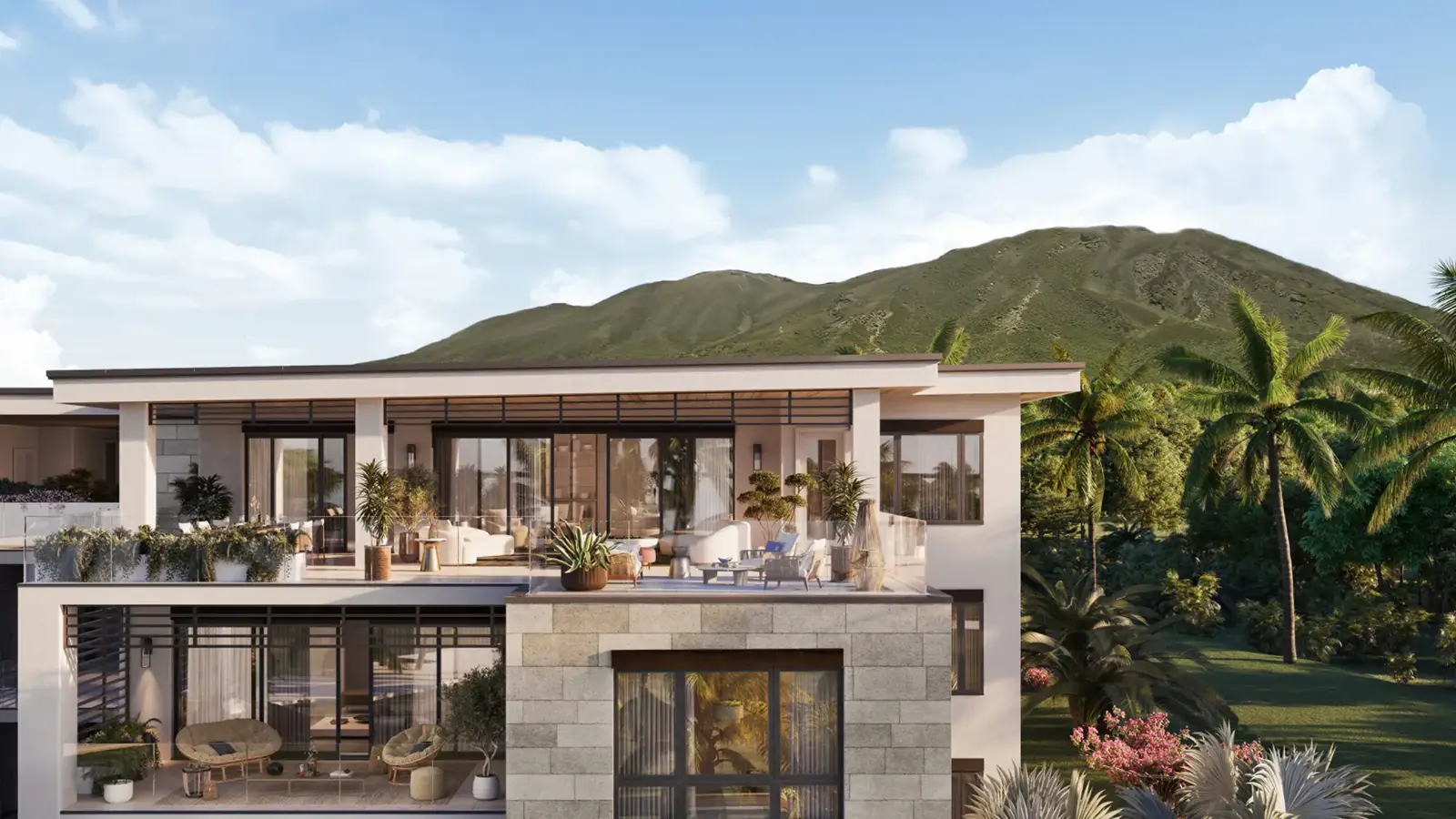
In late August 2024, Forbes contributor Peter Lane Taylor published a long look at the branded residence sector, a corner of luxury property in which hotel companies attach their name, service and amenities to privately owned homes. His centrepiece was a new community on Nevis. The article, originally reported by Forbes on August 29, 2024, argued that Four Seasons has held its lead in this field for four decades, and that Nevis Peak Residences is its latest example.
This page summarises the piece in our own words. The full article is at Forbes.
- Year Four Seasons began offering branded residences, per Forbes
- 1985
- Size of Four Seasons Resort Nevis, per Forbes
- 350 acres
A sector that began in the 1980s
Taylor opens with the scale of the market. He cites a Knight Frank estimate that branded residences make up about a tenth of global luxury sales, and a Savills count of 690 completed branded projects in more than 70 countries, with roughly 600 more in the pipeline for delivery by the end of the decade.
The history he gives is short. Private residences attached to five-star hotels date from the 1980s, and the early partners were established hospitality names. The reasoning is that hotel companies already know how to deliver complex buildings in remote places, and already run the service and privacy that residential owners expect.
Newer entrants, from fashion houses to car makers and restaurant groups, are now building towers of their own. Taylor’s point is that the hotel-led model has the longer record. Four Seasons, in his account, has offered residences since 1985 and operates 54 residential developments with more than 5,500 homes, alongside 130 hotels in 44 countries.
Where Nevis Peak Residences fits
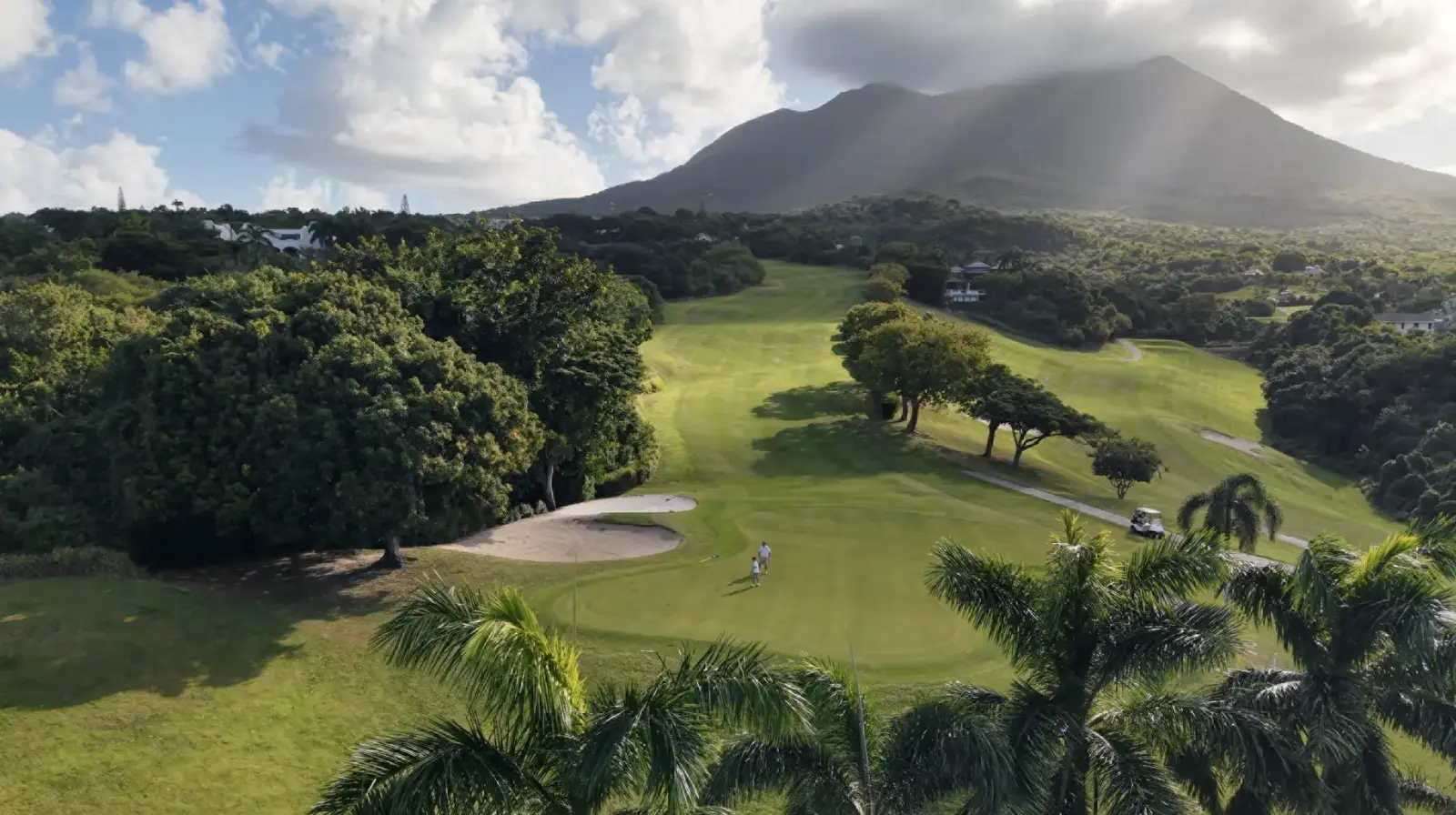
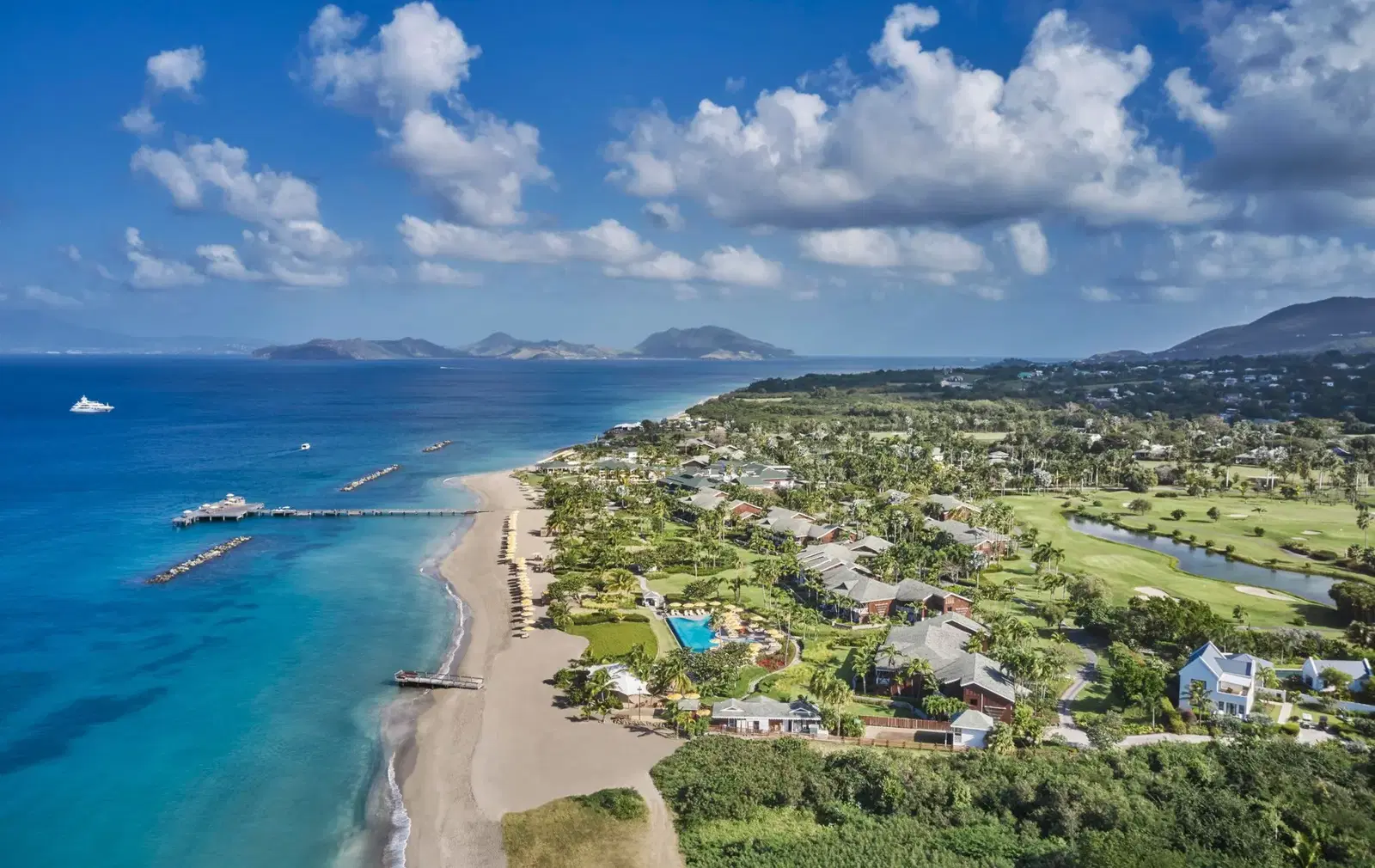
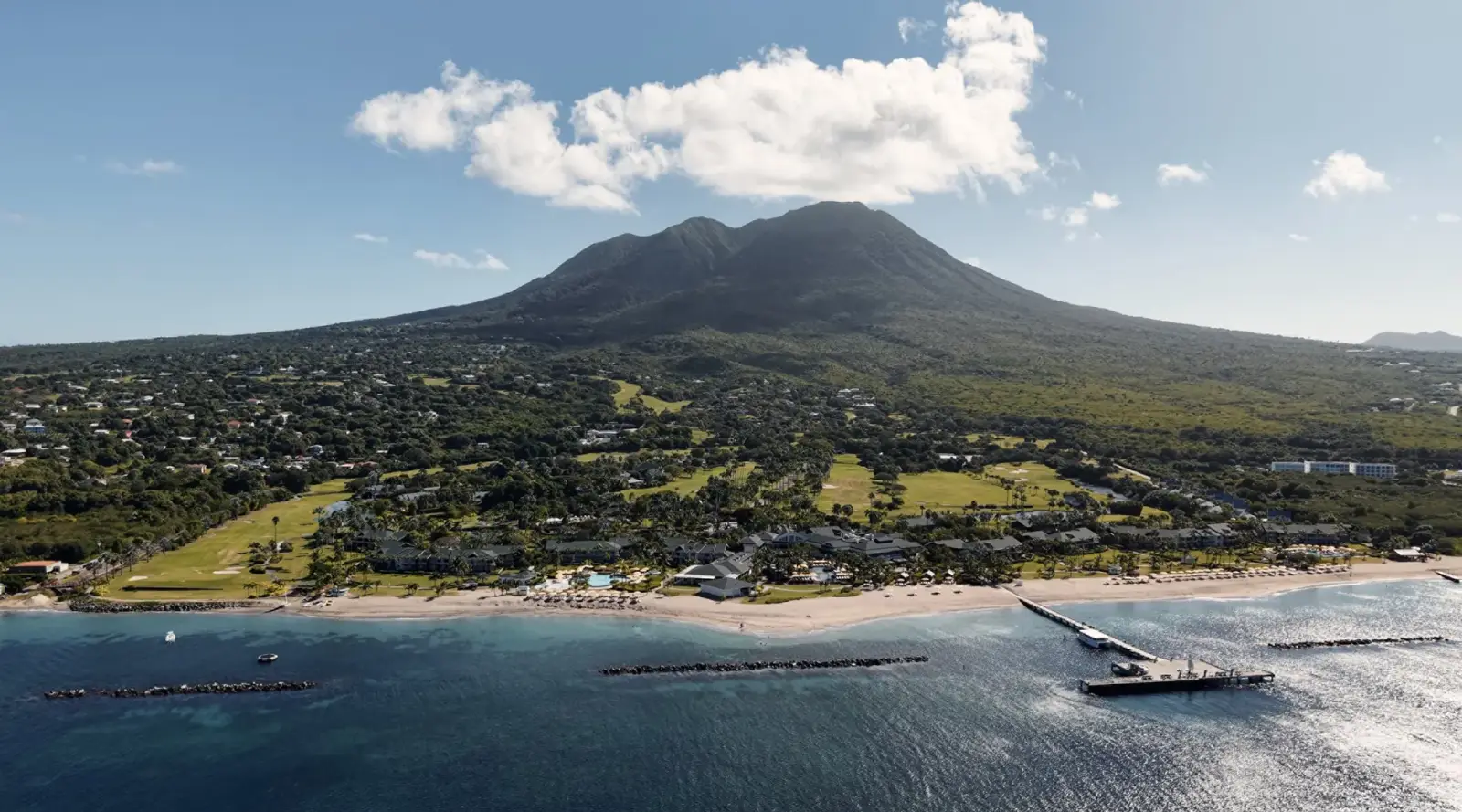
Taylor describes Nevis Peak Residences as the brand’s most recent offering, woven into the 350-acre Four Seasons Resort Nevis on the island’s southern coast. The article places the homes on the last developable parcels left inside the resort and reports 58 residences in six low-rise buildings. That count is the article’s, written in August 2024; sources from 2025 give a different breakdown, described in our construction coverage.
The homes are one-, two- and three-bedroom, between 1,725 and 3,730 square feet, and all sit along the 7th and 8th fairways of the Robert Trent Jones II golf course. Taylor contrasts them with the nearby Villas at Pinney’s Beach, which are detached houses, and says the Nevis Peak buildings aim for a balance of density, privacy and community.
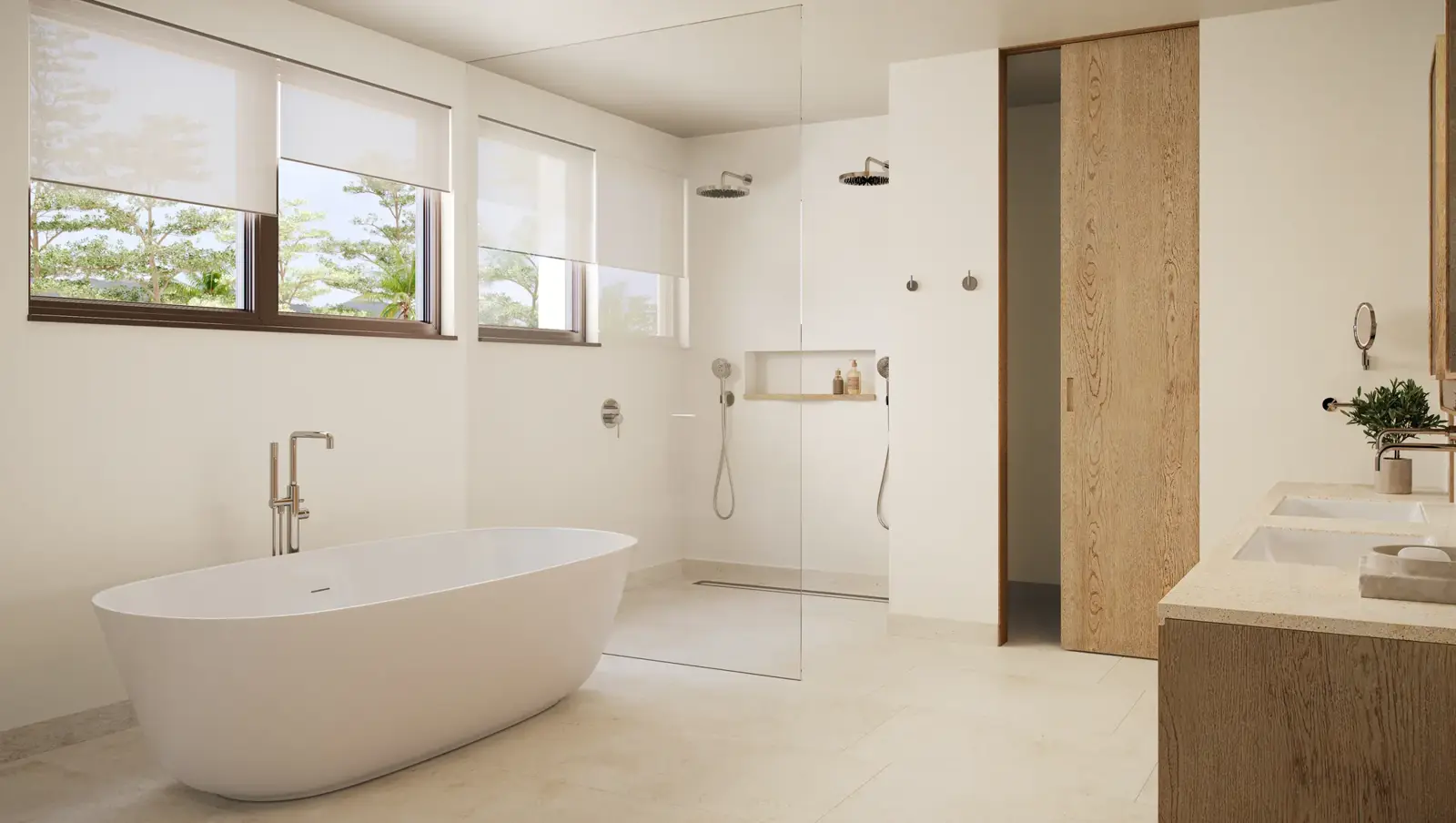
Each home is delivered fully furnished, in what he calls a Caribbean-chic style: traditional island materials, floor-to-ceiling windows and large terraces facing the Caribbean Sea, Nevis Peak, neighbouring St. Kitts and the protected rainforest around the resort.
“People want the 5-star hotel lifestyle all year round.”
Life beyond the front door
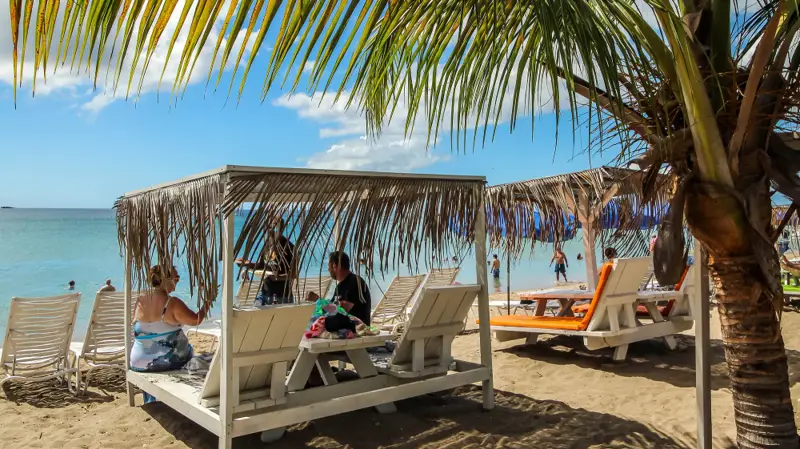
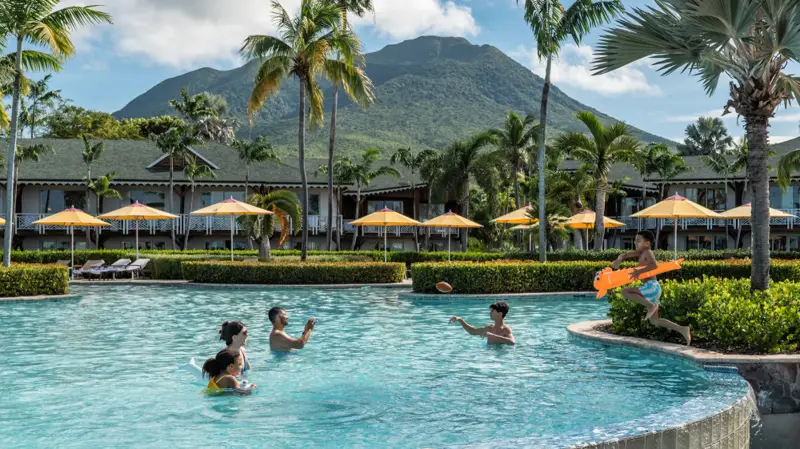
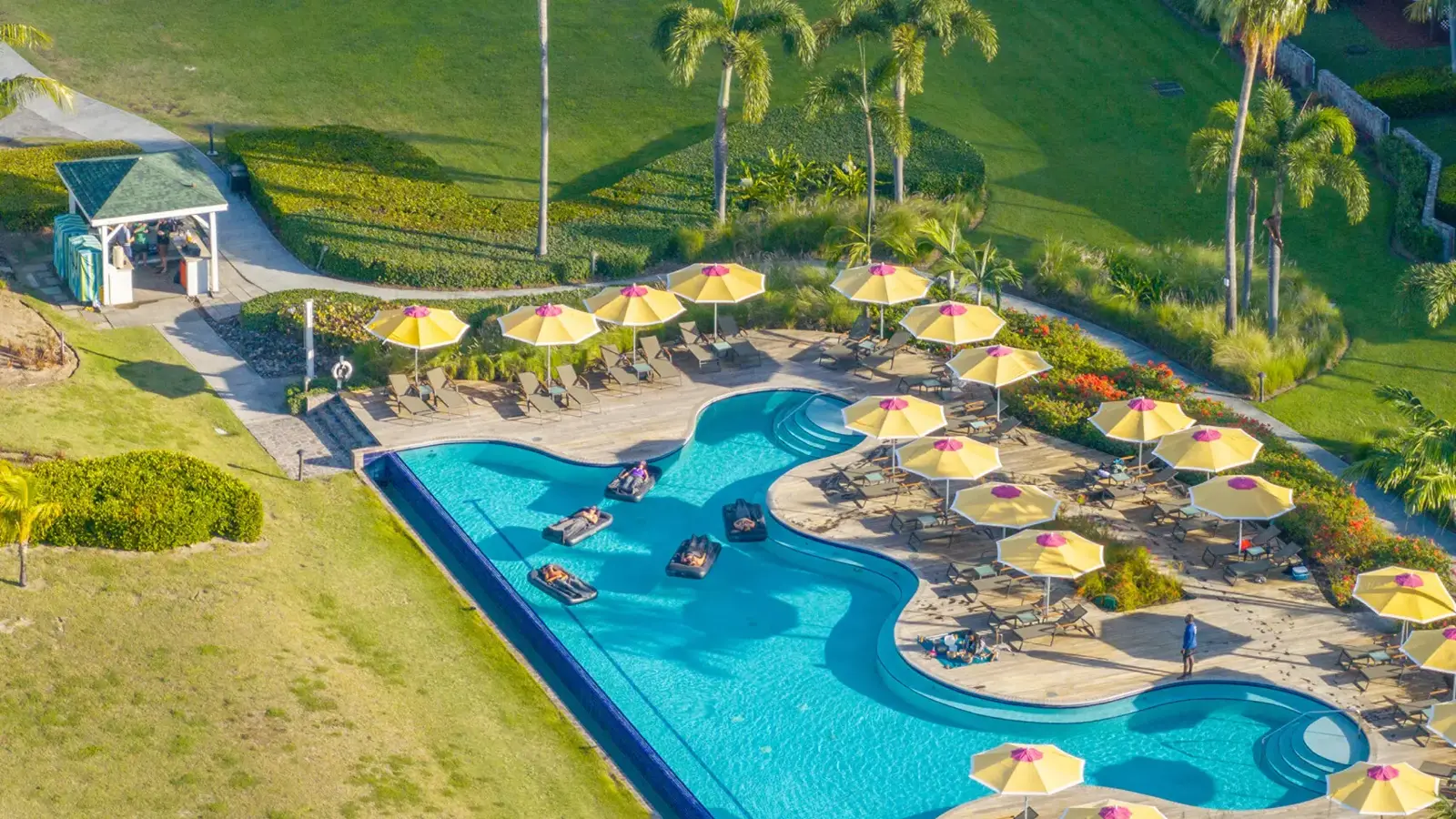
Much of the article is about what surrounds the homes. Owners get a residents-only clubhouse, and access to the resort’s three oceanfront pools, four restaurants, full-service spa, beach club, children’s splash pool and play areas, and the largest tennis and pickleball complex in the Caribbean.
A residential team works around the clock, arranging things such as personal chefs, tee times, a sunset sail, or provisioning before arrival. A separate property management team looks after each home behind the scenes, which Taylor presents as a practical answer to a familiar problem: how to lock the door and leave for months.
The developer’s view
Taylor quotes the principals of F.S.R. Estates, the firm that has developed Four Seasons residences and other private homes across St. Kitts and Nevis and elsewhere in the Caribbean for almost two decades. One of them explains the appeal in plain terms.
The same developer describes its typical buyer as younger than the stereotype: millennials and pre-retirees looking for a place to enjoy now. That echoes what other coverage of Nevis has noted about the island drawing buyers in their late forties and early fifties.
Taylor also notes that Nevis is the birthplace of Alexander Hamilton, and that it has quietly attracted a small, private community of superyachts and gated estates without losing its low profile.
What it means for owners and visitors
For anyone considering Nevis, the article’s practical message is that Nevis Peak Residences is meant to be lived in: furnished, serviced and tied to a resort that has been on the island since 1991. The resort’s facilities are open to owners, and the buildings take their views from the same fairways visitors play.
Because unit counts and timelines have been updated since Forbes wrote, speak to the sales office at the resort for the current picture, and see the Journal’s other articles for the latest from the site.