Nevis
Nevis
A small island with one mountain, quiet beaches and an easy pace. Here is how to reach it, what the seasons are like and what daily life looks like.
In this section
The Island
Beaches, rainforest and old stone sugar estates, on an island of about 13,000 people.
Explore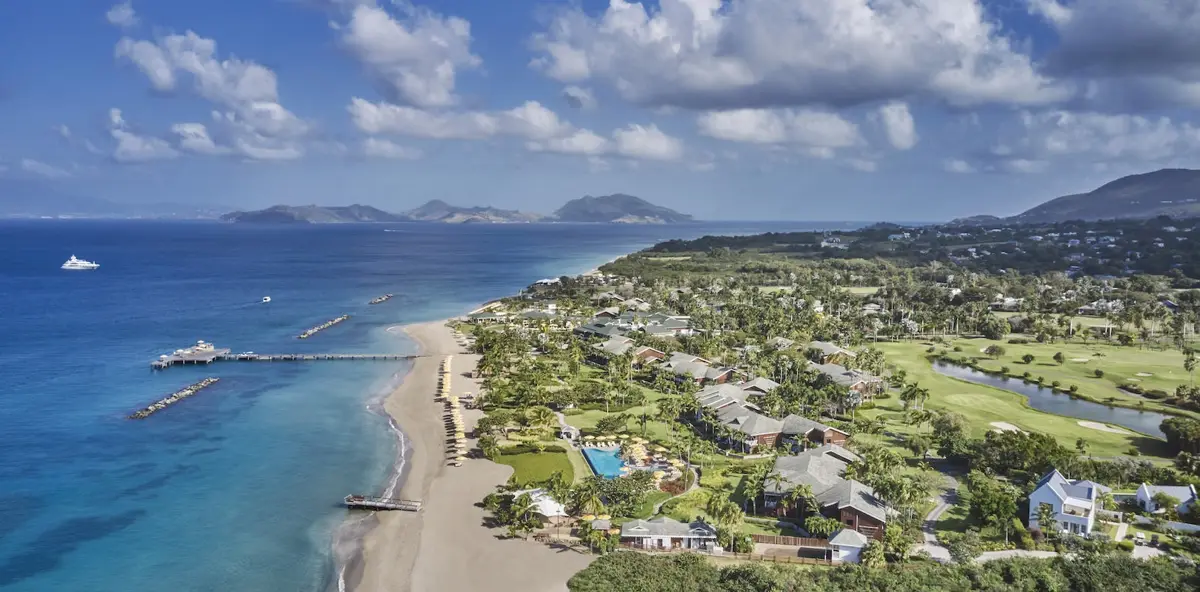
Getting There
Fly to St. Kitts or Nevis, then a short transfer to the resort.
Explore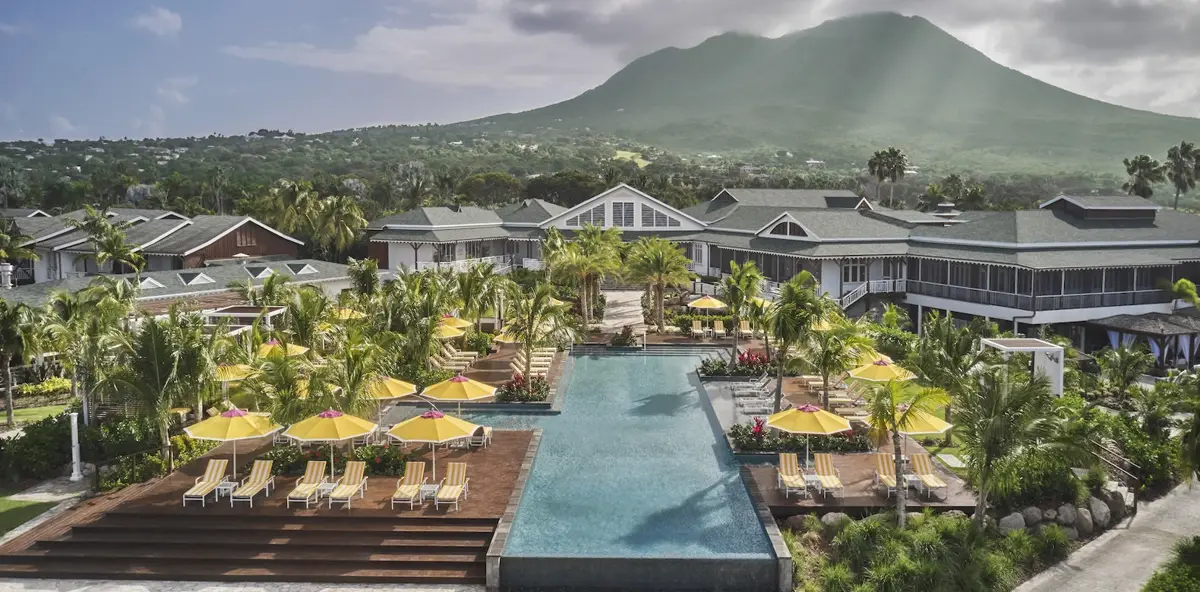
Hurricanes and Construction
The season, how households prepare, and the questions to put to the sales team about construction.
Explore
Nevis at a glance
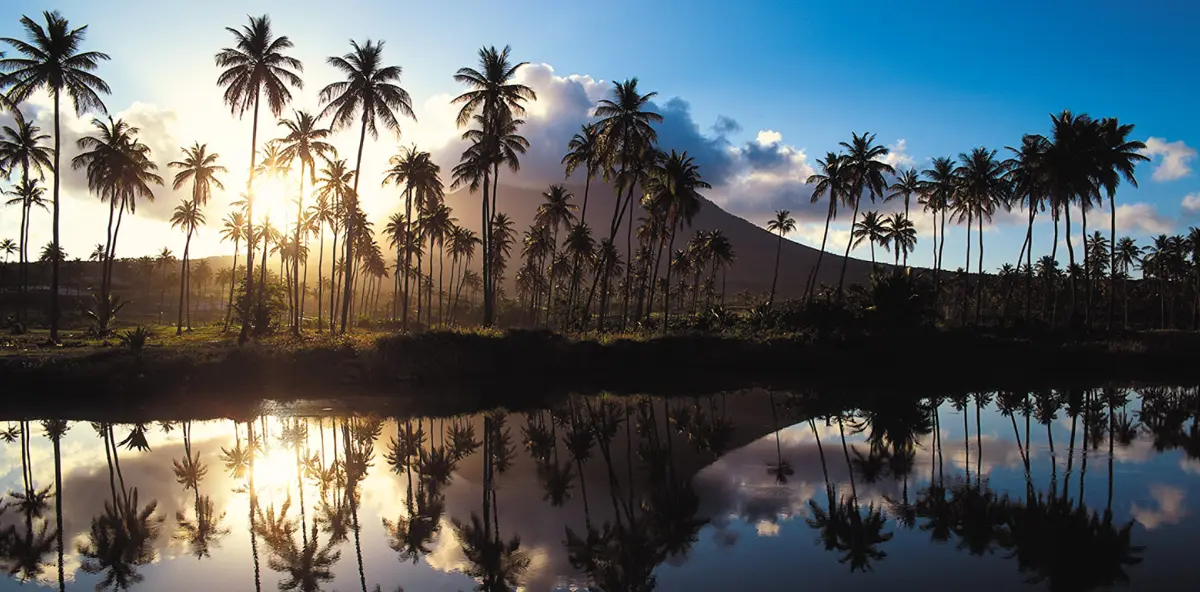
Nevis lies at the northern end of the Lesser Antilles, a few miles across a narrow channel from St. Kitts. It is roughly circular, with a single volcanic peak at its center and beaches around the edge.
The Nevis Tourism Authority describes golden and black-sand beaches, rainforest and mountains, and an island that feels unhurried. It also notes that Nevis has no traffic lights and no fast-food chains.
- Area
- 93 square kilometers (36 square miles)
- Population
- 13,182 at the 2021 census
- Capital
- Charlestown
- Highest point
- Nevis Peak, 3,232 feet (985 meters)
- Language
- English; Nevis Creole is also spoken
- Currency
- Eastern Caribbean dollar, pegged at EC$2.70 to US$1
- Driving
- On the left
- Time zone
- Atlantic Standard Time
Getting there
Most visitors fly into Robert L. Bradshaw International Airport on St. Kitts, which the Nevis Tourism Authority lists as having nonstop flights from major U.S., Canadian and U.K. cities. From there a taxi leads to the dock and a short sea crossing, by water taxi or public ferry, reaches Nevis.
Nevis has its own airport, Vance W. Amory International, with a single 1,220-meter runway. It handles charters, regional flights and private jets, with connections through St. Maarten, Antigua and San Juan.
For the resort itself, Four Seasons lists the Nevis airport at about 10 minutes away and the St. Kitts airport at about 30 minutes, made up of a 15-minute car ride and a 15-minute boat ride. Cars can cross on the Sea Bridge car ferry between Major's Bay on St. Kitts and Cades Bay on Nevis. The full route guide is on Getting There.
Climate and seasons
The Nevis Tourism Authority gives average temperatures of 26 to 29 degrees Celsius (79 to 84 degrees Fahrenheit) with year-round humidity. It describes January to April as relatively cool and dry, and June to November as hot, humid and rainy.
The Atlantic hurricane season runs from June 1 to November 30. NOAA's National Hurricane Center puts the climatological peak at September 10, with most activity between mid-August and mid-October. Hurricanes and Construction covers the season and how households prepare.
Charlestown and its history
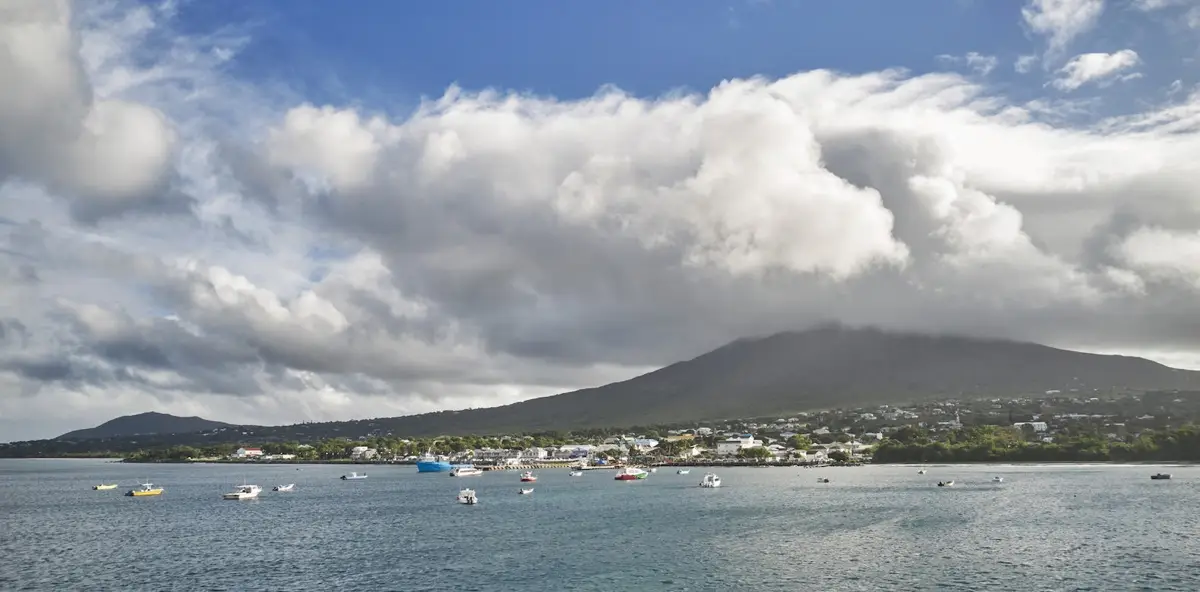
Charlestown is the capital, a port town of Georgian buildings, traditional wooden houses and St. Paul's Anglican Church. Ferries from St. Kitts dock here. The island was settled by the English in 1628, and sugar made it one of the region's wealthiest colonies, an economy built on enslaved labor. Slavery was abolished in 1834.
Alexander Hamilton was born on Nevis in 1757, and is described as the only U.S. Founding Father born in the Caribbean. The Museum of Nevis History stands in Charlestown on the site traditionally associated with his birth.
The Bath Hotel, built in 1778 beside natural hot springs, is regarded as the first hotel in the Caribbean. Horatio Nelson married Frances Nisbet on Nevis in 1787. Old stone sugar mills still stand across the island; one is visible from the second tee of the resort's golf course. More on the island's past is on The Island.
Beaches
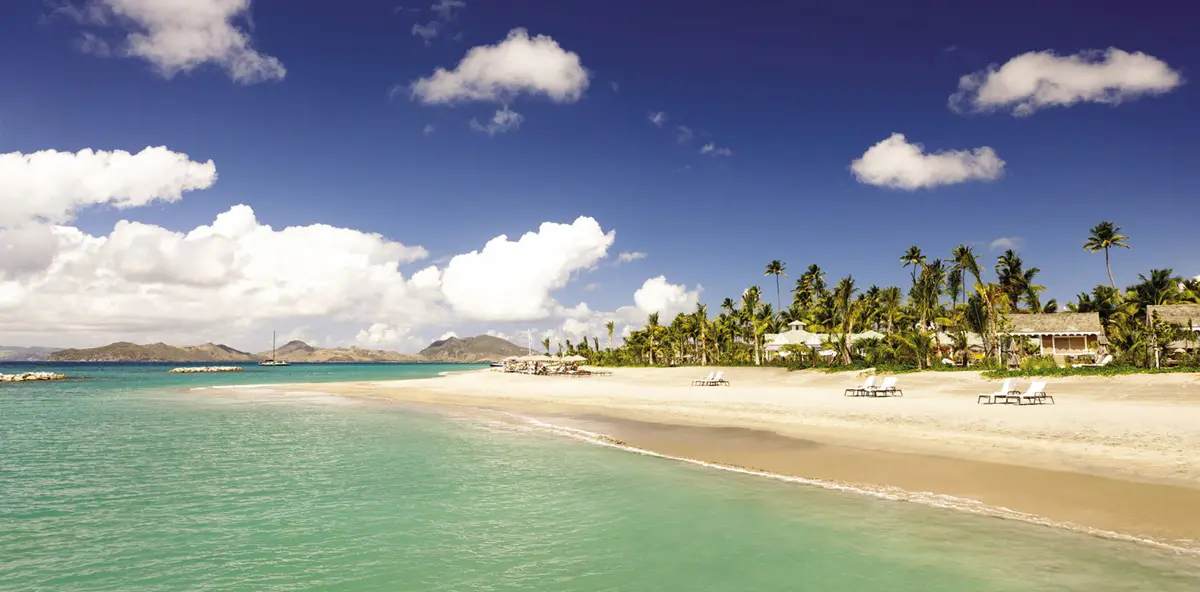
Pinney's Beach runs along the west coast and is the island's most developed beach. The resort sits on it, along with beach bars such as Sunshine's, known for grilled seafood and a rum punch called the Killer Bee.
Sheltered swimming is also found at Nisbet, Lovers and Oualie beaches. Oualie is where water taxis from St. Kitts land. From summer, hawksbill, leatherback and green turtles nest on Nevis beaches, and the resort has run a sea turtle conservation program for two decades.
Culture and the calendar
Culturama, created in 1974, runs from late July into early August with calypso, soca, pageants, food fairs and street parades. Mocko jumbies perform during Culturama and at Christmas, and kite making is an Easter tradition.
String band music is a community tradition. Traditional wooden houses with hand-laid stone bases and gingerbread trim sit alongside Georgian stone buildings in Charlestown, and the Charlestown Art Gallery shows local artists.
Nevis Peak and nature
Nevis Peak rises 3,232 feet (985 meters) and is often wrapped in cloud. Its slopes carry rainforest, which guided hikes cross. Hike times vary by source, so ask a local guide or the resort's team for current routes and conditions.
The Botanical Gardens of Nevis opened in 1998 on part of the former Montpelier sugar estate, in the southwestern foothills of the peak. The six-acre gardens include themed plantings, fountains and a glass conservatory with parrots. Green vervet monkeys are a common sight around the island.
Dining
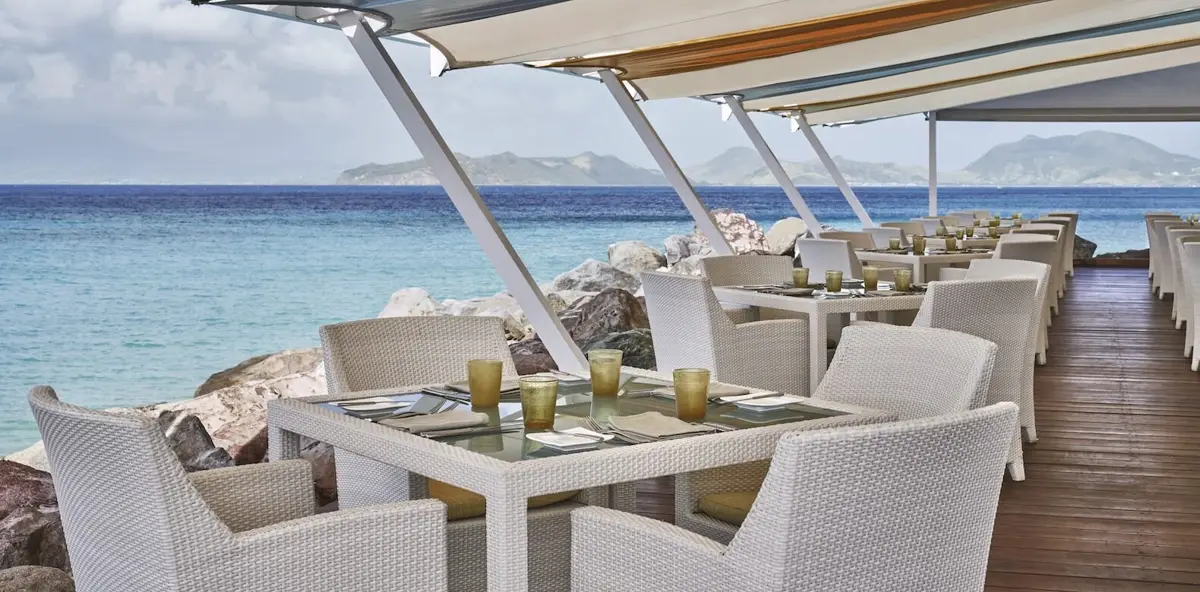
The resort lists four dining venues and a rum bar: EsQuilina, On the Dune, Mango, Kastawey Beach Bar and the Crowned Monkey Rum Bar. Mango serves Caribbean cooking in an open-air setting, and On the Dune is known for Caribbean spiny lobster.
Beyond the resort, plantation inns hold weekly dinners. The Nevis Tourism Authority lists a Wednesday West Indian buffet and pig roast at The Hermitage, and Montpelier's Mill Privée occupies a restored sugar mill. Local cooking features clay pots, fresh lobster, ginger, turmeric, nutmeg and allspice.
Golf
The resort's 18-hole course was designed by Robert Trent Jones II and opened in February 1991. It plays to par 71 over 6,766 yards, with a pro shop, instruction, a driving range and a putting green.
The site is a former sugar and coconut plantation dating to the late 1790s. The remains of a stone windmill can be seen from the second tee.
Recreation at the resort
Beyond golf, the Four Seasons press kit lists tennis on two artificial-turf, two hard and four red clay courts, four pickleball courts, and water activities including sailing, boating, scuba certification and deep-sea fishing. A spa and three pools complete the amenities.
Rainforest hiking, kayaking along the shoreline and diving and snorkeling are among the activities the Nevis Tourism Authority lists across the island.
Healthcare and schools
Alexandra Hospital in Charlestown is Nevis's public hospital. According to the Nevis Island Administration's 2025 budget remarks, it provides outpatient and inpatient care, responds to emergencies and serves residents and visitors. Departments include laboratory, radiology and an eye care program. The 2026 budget funds a new hospital wing, with financing still being negotiated.
The island has two public secondary schools run by the Nevis Island Administration, Charlestown Secondary School and Gingerland Secondary School, along with Nevis International Secondary School. Families should confirm admissions and options directly with the schools and the Ministry of Education.
Currency, language and daily practicalities
The Eastern Caribbean dollar has been pegged at EC$2.70 to US$1 since July 7, 1976, according to the Eastern Caribbean Central Bank. U.S. dollars are widely accepted on Nevis, and ATMs are available, although the Tourism Authority advises carrying some cash because some businesses do not take cards.
English is the main language, with Nevis Creole also spoken. Drivers keep to the left, and visitors who rent a car get a temporary local license through the rental company. Taxis are plentiful.
Getting around
Renting a car is optional because taxis are plentiful, and hotels can arrange rides with preferred drivers. Rental companies operate in Charlestown, at Oualie Beach and at Clay Ghaut.
Caribbean Journal notes that roads are winding, so trips take longer than the distances suggest. A drive around the island passes villages, churches and stone ruins.
Safety
The UK Foreign, Commonwealth and Development Office notes that serious crime has occurred and recommends ordinary precautions: keep accommodation secure, avoid isolated areas after dark and use licensed taxis, which carry a yellow plate marked T or TA. It also notes that currents can be strong and that not all beaches have lifeguards or warning flags.
The same advice says there is no recent history of terrorism in St. Kitts and Nevis. It recommends travel insurance suited to your plans.
Residency and citizenship
St. Kitts and Nevis established its Citizenship by Investment program in 1984. The Citizenship by Investment Unit sets the rules, approves developments and decides applications. Which residences qualify, and the government's current terms, are confirmed with the Unit before any commitment.
Our Citizenship by Investment page sets out how the program works. Buyers should take advice from a qualified adviser on licences, duties and tax.
Questions
Which airport should I fly into for Four Seasons Resort Nevis?
Most visitors arrive via Robert L. Bradshaw International Airport on St. Kitts, then cross by water taxi or ferry. Vance W. Amory International Airport on Nevis serves regional and private flights, and Four Seasons lists it as about 10 minutes from the resort.
What currency is used on Nevis?
The Eastern Caribbean dollar, pegged at EC$2.70 to US$1. U.S. dollars are widely accepted.
When is hurricane season?
The Atlantic hurricane season runs from June 1 to November 30, with the climatological peak around September 10.
What side of the road do people drive on?
The left. Rental companies arrange a temporary Nevis license.
Sources
- Nevis Tourism Authority: About Nevis
- Nevis Tourism Authority: History
- Nevis Tourism Authority: FAQs
- Nevis Tourism Authority: How to get to Nevis
- Nevis Tourism Authority: Getting around
- Nevis Tourism Authority: Restaurants and bars
- Four Seasons Resort Nevis press kit: Resort facts
- Caribbean Journal: This Caribbean Island Has Alexander Hamilton's Birthplace (July 18, 2026)
- Wikipedia: Nevis (used to locate figures; area, census, parishes, history)
- Wikipedia: Charlestown, Nevis
- Wikipedia: Eastern Caribbean dollar (cites an ECCB release of 6 July 2010 for the peg)
- Islands: Botanical gardens of Nevis
- NevisPages: Alexandra Hospital services (Dec 5, 2025)
- Nevis Island Administration: Charlestown Secondary School 2025 championship
- UK FCDO: St Kitts and Nevis, safety and security
- UK FCDO: St Kitts and Nevis travel advice
- NOAA National Hurricane Center: Climatology
- Citizenship Unit of St. Kitts and Nevis
The fact sheet
Request the fact sheet
The residences, the resort and the ownership details, in one PDF.
Or request the fact sheet with the form.
Sales office, Four Seasons Resort Nevis